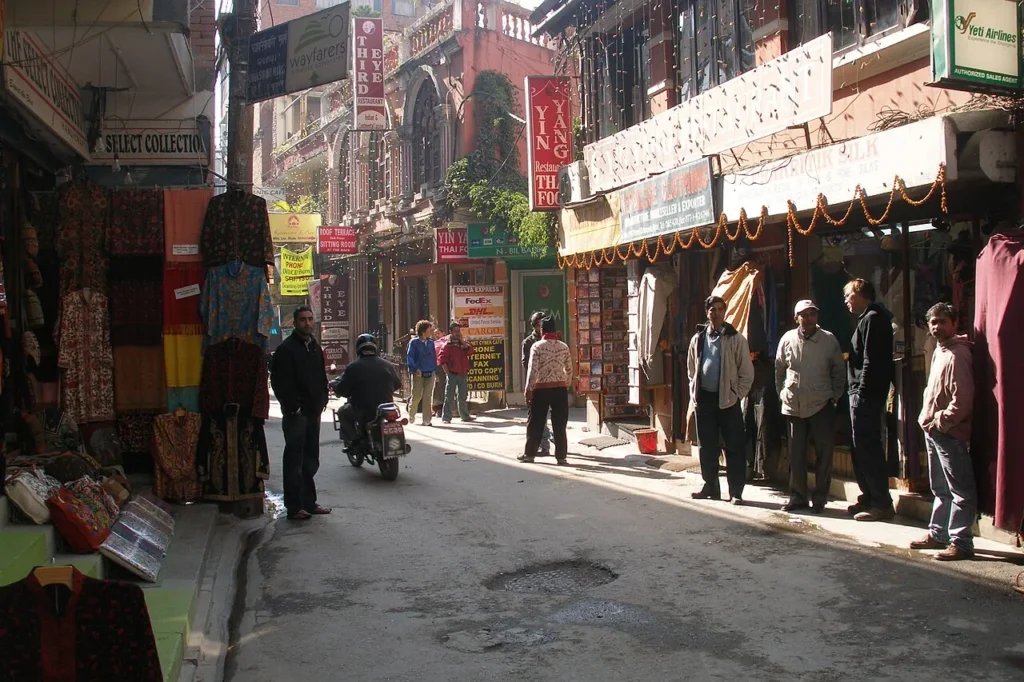
Thamel is where Kathmandu happens. A dense maze of narrow lanes packed with trekking shops, rooftop cafés, temples, live music bars and 24-hour energy, it is the first home of nearly every traveller who lands in Nepal. You can sleep here, eat here, gear up here and party here — but the travellers who love Thamel most are the ones who know what to do with their days.
This guide is our honest, local list of the ten best things to do in and around Thamel, based on what our guests tell us they loved most. Some are famous, some are quiet secrets, and all of them are within a short walk or ride of Newa Home Hotel.
1. Get Lost in the Thamel Bazaar (On Purpose)
The single best thing to do in Thamel costs nothing: wander. The neighbourhood is a living market that has served travellers since the 1960s hippie trail days. Every lane has its own character — one is all singing bowls and pashmina shawls, the next is trekking gear, the next is thangkas and prayer flags.
A few tips from experience:
- Bargain with a smile. Prices are rarely fixed. A friendly counter-offer around 60–70% of the first quote is normal, and shopkeepers enjoy the game.
- Buy gear, but check it. Thamel sells every outdoor brand on earth, at every quality level. If you are trekking, inspect zips and seams before you buy.
- Go early or late. Midday is crowded; mornings are calm and golden, evenings are electric.
Even if you buy nothing, an hour of wandering here teaches you more about Kathmandu than any museum.
2. Walk to the Garden of Dreams
Two minutes from the northern edge of Thamel sits one of the city’s most peaceful places: the Garden of Dreams, a restored neo-classical garden built in the 1920s by Kaiser Shamser Rana. Lawns, fountains, pavilions and a café — it is an oasis of calm in the middle of the chaos, and the perfect place to read, write postcards or simply sit in the sun with a coffee.
Go in the morning when the light is soft and the lawns are empty. The entrance fee is small and worth every rupee.
3. Climb to Swayambhunath (The Monkey Temple)
Visible from half the city, Swayambhunath is Kathmandu’s most iconic landmark — a 5th-century stupa perched on a hill west of Thamel, guarded by hundreds of resident monkeys and wrapped in prayer flags. The climb up the eastern staircase (365 steps, one for each day of the year) is a rite of passage.
At the top you get the best panoramic view of the Kathmandu Valley, the gold-plated spire up close, and a lesson in how Buddhism and Hinduism coexist in Nepal — pilgrims of both faiths worship here. Go at sunrise for the view, or at sunset when the city lights come on below. Keep food hidden; the monkeys are professionals.
4. Explore the Old City: Asan, Indra Chowk and the Hidden Courtyards
South of Thamel, the old city is where Kathmandu has traded for a thousand years. Asan is a market square where spice pyramids, brass lamps and vegetables compete for space under a canopy of umbrellas. Indra Chowk, a few minutes further, is famous for its fabric shops and for the hidden temple of Akash Bhairav.
The real treasure is the courtyards: duck through any carved wooden doorway and you may find a quiet bahal — a Buddhist courtyard monastery — with children playing and butter lamps burning, untouched by tourism. This is also the best part of town for street food; our Newari cuisine guide has the full list of what to eat here.
5. Visit Kathmandu Durbar Square
The historic royal square of Kathmandu is a fifteen-minute walk south of Thamel and a UNESCO World Heritage Site: palaces, pagodas, courtyards and the Kumari Ghar, home of the Living Goddess, a young girl worshipped as the incarnation of the goddess Taleju. If you are lucky, you will see her appear at her carved window for a few seconds — photography is forbidden, but the moment is unforgettable.
The 2015 earthquake damaged several buildings here, and restoration continues — which makes the square a living lesson in both history and resilience. Hire a licensed guide at the entrance; the stories behind the carvings are worth it.
6. Take a Day Trip to Bhaktapur or Patan
Thamel is a great base because the valley’s other two ancient kingdoms are close. Bhaktapur, forty minutes east, is the most medieval city in Nepal — pottery squares, woodcarving alleys, the famous juju dhau yogurt and a durbar square that feels like a film set. Patan, across the river, has the valley’s finest museum and the most elegant durbar square of all.
Both are easy half-day or full-day trips. If you would rather go with a guide who knows the stories, our Tours & Transfers page lists trusted day tours our guests can book with a discount.
7. Watch the Evening Aarti at a Temple
Every evening, temples across the valley perform aarti — a fire-offering ritual with lamps, incense, bells and chanting. The most atmospheric for visitors is at Pashupatinath on the banks of the Bagmati river, but smaller evening ceremonies happen at temples near Thamel too. Ask our front desk what is happening this week; they will point you to the nearest one and tell you how to behave respectfully (shoes off, no photos during the ritual, sit where locals sit).
8. Eat Your Way Through the Rooftops
Thamel’s rooftops are an institution — cafés and restaurants with open terraces where you can watch the sun set over a sea of brick and prayer flags. The food scene deserves its own guide (we wrote one — see our complete guide to Newari cuisine), but the short version is: try momos, try a Newari khaja set, and finish with masala tea on a rooftop while the temple bells ring below.
Our own rooftop restaurant at Newa Home Hotel serves Newari favourites with one of the better rooftop views in the area — no reservation drama, just walk up.
9. Listen to Live Music
Kathmandu has a live music scene that surprises people. Thamel alone has several venues with bands playing most nights — Nepali folk-fusion, rock, jazz and reggae covers. The local sound is a real mix: traditional instruments like the sarangi and madal showing up in modern arrangements. Ask at the front desk for tonight’s lineup; shows are cheap, the atmosphere is warm, and it is the easiest way to meet other travellers.
10. Book a Himalayan Experience
Thamel is the gateway to the Himalayas, and you do not need three weeks to feel the mountains. Options from the city include:
- Everest scenic flights — one hour over the world’s highest peaks, departing from the domestic airport each morning.
- Nagarkot sunrise trips — an hour’s drive to a hill station that looks straight at the Everest range on clear days.
- Chandragiri cable car — a modern cableway to a 2,500m ridge with Himalayan panoramas and a temple at the top.
- Day hikes — Shivapuri National Park, on the valley’s northern rim, is a forested hike with monastery visits and valley views, starting just outside the city.
We can arrange all of these through our partner tour operator — see the Tours & Transfers page for details and the guest discount.
Bonus: The Small Things That Make Thamel Special
Beyond the big ten, Thamel rewards slow travellers:
- Morning bakery runs. Fresh croissants and Nepali milk tea before the crowds wake up.
- Bookshops. Kathmandu has excellent second-hand bookshops — perfect for trekking reading.
- Singing bowl sessions. Several shops offer sound-healing demonstrations; even sceptics find them relaxing.
- Barber shops and tailors. A shave or a custom-tailored shirt costs a fraction of home prices.
- People watching with chiya. A cup of milk tea at a street stall is the cheapest seat at the best show in town.
Practical Tips for Thamel
- Cash is king. ATMs are everywhere but charge fees; carry small notes for markets and rickshaws.
- Walk everywhere. Thamel is compact. For anything further, agree on a taxi price before you get in.
- Watch the traffic. Motorbikes rule; cross streets slowly and predictably and traffic will flow around you.
- Stay hydrated and pace the spice. The altitude (1,400m) is mild but real, and the food is rich.
- Respect the temples. Leather items are often forbidden inside temple compounds, and always walk clockwise around stupas.
A Perfect 3 Days in Thamel: A Ready-Made Itinerary
If you want the highlights without the planning, here is the three-day rhythm we suggest to first-time guests:
Day 1: Orientation and Old City
Morning: walk the Thamel bazaar slowly, north to south, ending at the Garden of Dreams for coffee on the lawn. Afternoon: continue south into Asan and Indra Chowk, duck into two or three hidden courtyards, and eat your first chatamari at a street stall. Evening: Newari dinner on a rooftop — start with our Newari cuisine guide so you order like a local.
Day 2: Icons and Views
Morning: climb Swayambhunath early, before the heat and the tour buses. Walk or taxi to Kathmandu Durbar Square, hire a guide, and find the Kumari’s window. Afternoon: rest at the hotel or a café — pacing matters at altitude. Evening: live music in Thamel, then a slow wander through the lit-up gear shops.
Day 3: A Day Trip
Pick your flavour: Bhaktapur for medieval Newar culture, Patan for museums and elegance, Nagarkot for sunrise over the Everest range, or the Chandragiri cable car for mountain views without the hike. All are easy from Thamel, and all can be arranged with a guide through our Tours & Transfers desk — with the guest discount.
Shopping in Thamel: What Is Actually Worth Buying
Thamel sells everything, but some things are genuinely good value and genuinely Nepali:
- Pashmina and cashmere. Real pashmina from the highlands is a Kathmandu speciality. Learn the burn-test trick from an honest shopkeeper, and pay for quality — a true pashmina shawl is an heirloom.
- Singing bowls. Hand-hammered bowls from local workshops sound completely different from factory imports. Tap several; the right one rings in your chest.
- Thangka paintings. Religious scroll paintings made with mineral pigments, from weeks to months of work. Serious pieces come with the artist’s story; ask for it.
- Handmade paper (lokta). Notebooks, cards and lampshades from the bark of the lokta bush — sustainable, beautiful, and light to carry home.
- Nepali tea and spices. Ilam tea from the eastern hills, timur (Nepali pepper), and masala blends make the best edible souvenirs.
- Trekking gear. Down jackets, fleeces and packs at every price point. Inspect everything, test every zip, and remember: you get what you pay for.
Staying Safe and Sane in Thamel
Thamel is safe, but it is a tourist economy, and a few habits make it better:
- Agree prices before anything. Taxis, rickshaws, guides — price first, always.
- Watch your pockets in crowds. Petty pickpocketing is rare but not zero; a front pocket or cross-body bag solves it.
- Say no firmly and keep walking. Touts for treks, drugs and “special deals” lose interest in one second of zero eye contact. (Drugs are a hard no — Nepal’s penalties are severe and the “special offer” is usually a setup.)
- Drink smart. Local raksi and aila are strong; the altitude amplifies alcohol. Hydrate between drinks.
- Keep your hotel card. Grab our card at the front desk — if you get turned around, any taxi driver can read the address and bring you home.
Thamel After Dark: A Different Neighbourhood
When the sun drops, Thamel changes character. The gear shops shutter, the rooftop strings of lights come on, and the lanes fill with a different kind of energy. A few night-time rituals worth knowing:
- The rooftop circuit. Start with sunset drinks at one rooftop, migrate for dinner at another, and finish with live music at a third. Each has its own crowd and view; the walk between them is part of the fun.
- Night market snacks. Late-night momo stalls and fried snack vendors appear after dark — cheap, hot, and exactly what you want after a few hours out.
- The quiet hour. Around 1am the music winds down and Thamel becomes almost peaceful — a strange, lovely time for a last walk before bed.
- Temple lights. Some temples near Thamel are lit at night and nearly empty. A two-minute detour from the noise into centuries of stillness.
Day-Trip Distance Chart from Thamel
| Destination | Distance | Travel time | Best for |
|---|---|---|---|
| Garden of Dreams | 0.5 km | 5 min walk | Calm, coffee, reading |
| Swayambhunath | 3 km | 20 min walk / 10 min taxi | Views, monkeys, sunset |
| Kathmandu Durbar Square | 1.5 km | 20 min walk | History, Kumari |
| Patan Durbar Square | 5 km | 25 min taxi | Museums, architecture |
| Bhaktapur | 13 km | 45 min taxi | Medieval city, yogurt |
| Nagarkot | 32 km | 1.5 hr drive | Himalayan sunrise |
| Chandragiri cable car | 9 km | 40 min taxi | Mountain panorama |
| Shivapuri hike trailhead | 9 km | 35 min taxi | Forest hiking |
Frequently Asked Questions
Is Thamel safe at night?
Yes — Thamel is one of the safest parts of Kathmandu at night, with people around until late. Normal city sense applies: keep valuables secure and stick to lit streets.
How many days do I need in Thamel?
Two full days covers the highlights at a relaxed pace. Add a day for each day trip (Bhaktapur, Nagarkot, scenic flight) you want to take.
What should I buy in Thamel?
The classics: pashmina shawls, singing bowls, thangkas, trekking gear, handmade paper products and Nepali tea. Bargain politely and buy from shops that let you inspect everything.
Is Thamel good for families?
Yes. The Garden of Dreams, the monkey temple and the durbar squares are all family-friendly, and most restaurants are happy with children. The lanes are stroller-unfriendly, though — a carrier is better.
Where should I stay in Thamel?
Obviously we are biased — but the honest answer is: stay somewhere quiet. Thamel’s centre is loud at night; the edges give you the calm of a residential lane with the action two minutes away. That is exactly why Newa Home Hotel is where it is.
Can I walk everywhere from Thamel?
Within the neighbourhood and to the old city, yes — everything south to Durbar Square is a pleasant 20-minute walk. For Swayambhunath, Patan and Bhaktapur, take a taxi or join a tour; the distances are small but the traffic makes walking impractical. Our Tours & Transfers desk arranges all of it with transport included.
The Bottom Line
Thamel is not just a place to sleep between treks — it is the most concentrated slice of Kathmandu life you can experience in a short trip. Wander the bazaar, climb the monkey temple, eat Newari food, watch the evening rituals, and let the city’s rhythm pull you in. And when you are ready for the mountains, the gateway is right here.
Staying at Newa Home Hotel? Our front desk keeps an updated list of tonight’s music, this week’s festivals and the best current food stalls — just ask.
Stay with us in Thamel
Newa Home Hotel is your home base for exploring Kathmandu's food and culture — comfortable rooms, a rooftop restaurant, and a team that loves to point hungry guests in the right direction.