
If you come to Kathmandu and leave without eating Newari food, you have only seen half the city. The Newars — the indigenous people of the Kathmandu Valley — have spent more than a thousand years perfecting what is widely considered the most elaborate, most ritualised and most flavourful cuisine in Nepal. It is the food of ancient kingdoms, of street-corner shrines, of festivals that last for days, and of family recipes passed down through dozens of generations.
Yet most visitors never find it. They eat pizza in Thamel, maybe a plate of momos, and fly home thinking that is Nepali food. This guide exists to fix that. Below you will find the story behind Newari cuisine, the dishes you absolutely must try, where to find them around Kathmandu, and how to experience them the way locals actually do — including a guided food tour we recommend for first-timers.
Who Are the Newars? A Short History of the Valley’s Food Culture
The Newars are the original inhabitants of the Kathmandu Valley. Long before Nepal was unified into a single kingdom in the 18th century, the valley was home to three rival Malla kingdoms — Kathmandu, Patan and Bhaktapur — each ruled by Newar kings who competed not only in art and architecture but also in cuisine. The great durbar squares, the temples, the carved wooden windows that tourists photograph every day: all of it is Newar heritage.
That same competitive spirit shaped the food. Royal courts demanded elaborate feasts. Trade routes through Tibet and India brought spices, techniques and ingredients. Religious festivals required specific ritual foods, and every community, every caste, every neighbourhood developed its own specialities. The result is a culinary tradition with hundreds of distinct dishes — far more than any other ethnic group in Nepal can claim.
Three things define Newari cooking:
- Rice in every form. Beaten rice (chiura), rice flour crepes (chatamari), steamed rice-flour dumplings (yomari), rice beer (thwon) and rice pudding. Rice is not a side dish in Newar culture — it is the centre of the universe.
- Buffalo. While many Nepali communities avoid buffalo meat, Newar cuisine celebrates it. Choila (spiced grilled buffalo), kachila (spiced minced buffalo) and buffalo organ dishes are festival essentials.
- Mustard oil and local spices. The sharp, pungent flavour of mustard oil underpins most savoury Newar dishes, combined with turmeric, cumin, coriander, timur (Nepali Sichuan pepper), and fresh ginger, garlic and chilies.
The Dishes You Must Try
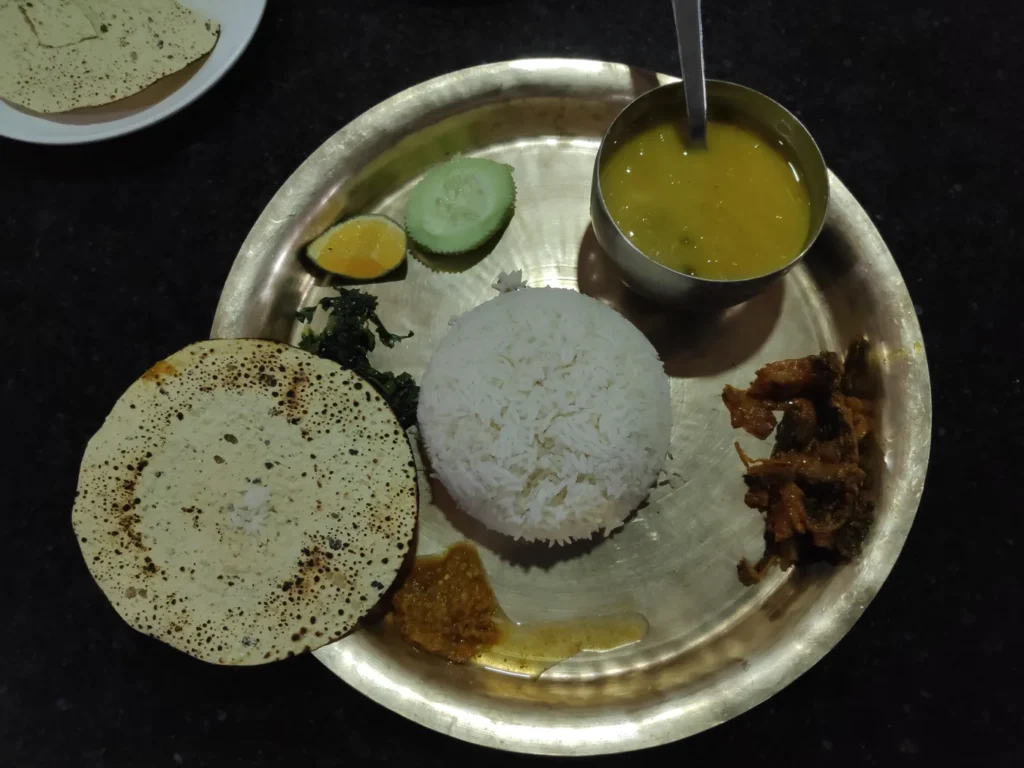
Walk into any Newar eatery and the menu can be overwhelming. Here are the essential dishes, ranked roughly in order of importance for a first-time visitor.
Samay Baji — The Complete Newari Platter
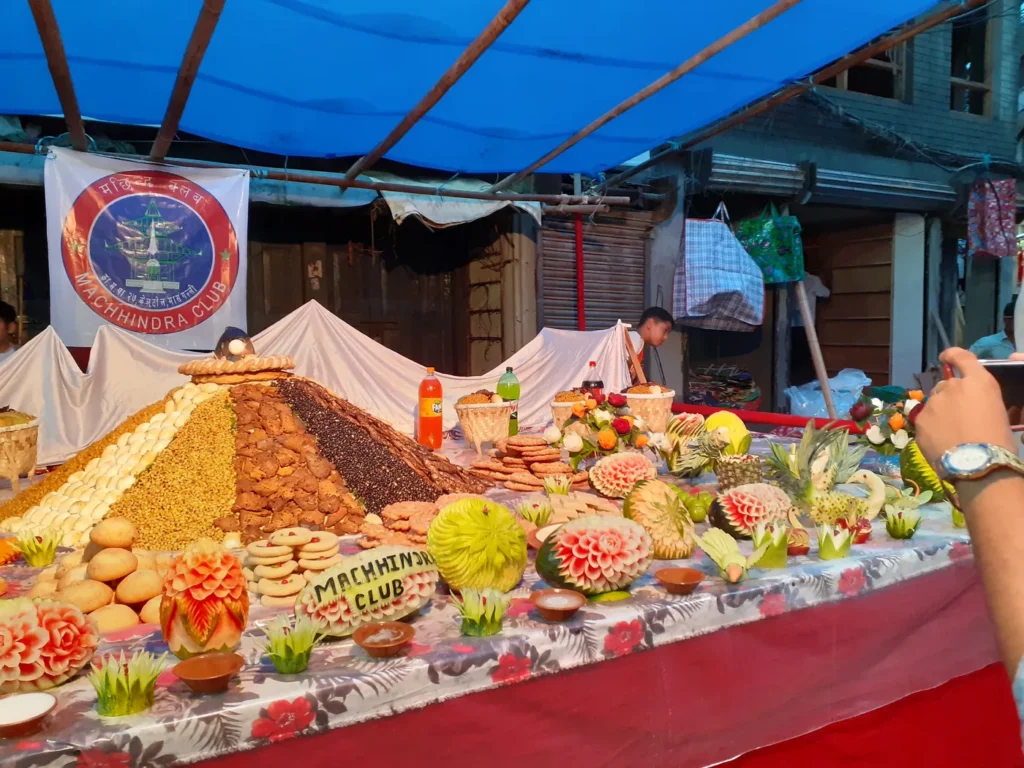
If you eat only one Newari dish in Kathmandu, make it samay baji. This is the traditional ceremonial platter, served on a brass or leaf plate: beaten rice (chiura) surrounded by small portions of spiced grilled buffalo meat (choila), boiled egg, black soybeans (bhatmas), fresh ginger, garlic, green chilies, potato salad, and sometimes fried fish or dried fish. It is traditionally accompanied by aila, the local distilled liquor.
Samay baji was originally food for festivals and rituals, but today it is the most accessible introduction to Newari flavours in one sitting. Every component plays a role — the bland crunch of the beaten rice, the smoky heat of the choila, the sharp bite of raw ginger — and together they explain the entire Newari flavour philosophy in a single plate.
Choila — Smoky, Spiced Grilled Meat
Choila is buffalo meat marinated in mustard oil, garlic, ginger, chilies and spices, then grilled over an open flame until charred at the edges. It is smoky, fiery and deeply savoury. You will find chicken and mushroom versions too, but buffalo is the classic. Choila is rarely eaten alone — it appears inside samay baji or alongside beaten rice and aila.
Yomari — The Sweet Icon of Newar Culture
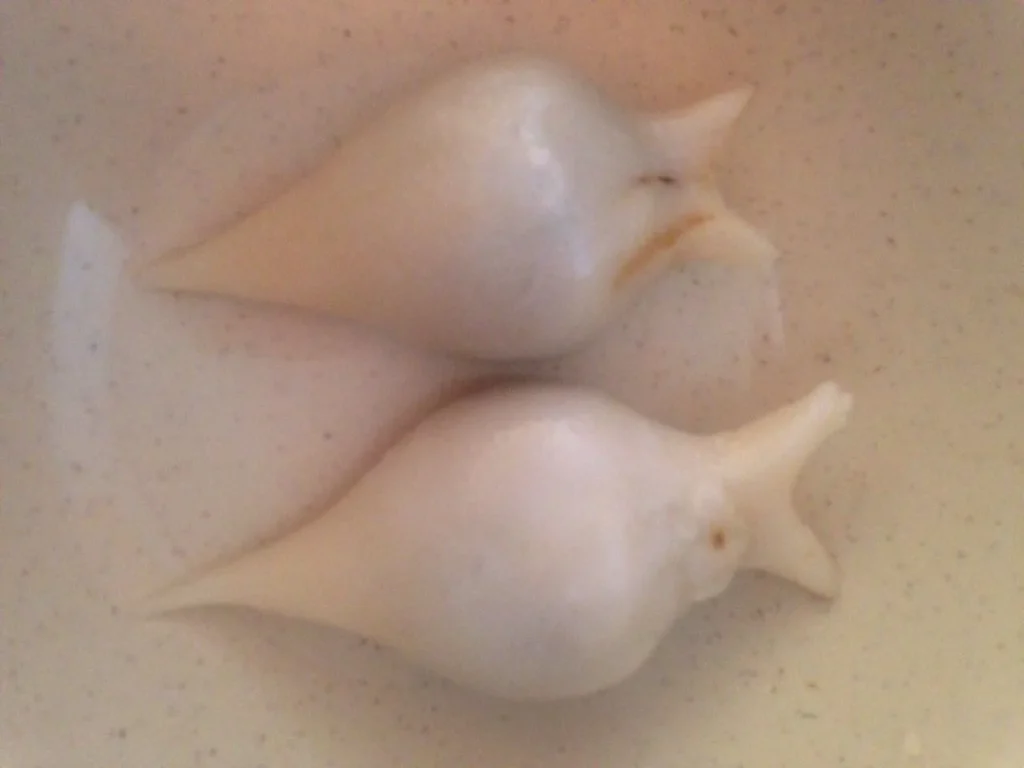
Yomari is instantly recognisable: a teardrop-shaped steamed dumpling made from rice flour, filled with molten chaku (molasses) and sesame, or with sweetened khuwa (milk solids). It is the most beloved Newari sweet, and it has its own festival — Yomari Punhi, celebrated on the full moon of December, when families steam yomari in huge batches and children go door to door asking for them.
There is a charming legend attached to the shape: the tail of the yomari is said to represent the goddess Annapurna, and the length of the tail is traditionally a measure of the maker’s devotion. Eat one fresh from the steamer, bite the tip, and drink the warm molasses inside — it is one of Kathmandu’s great small pleasures.
Chatamari — The Newari Rice Crepe
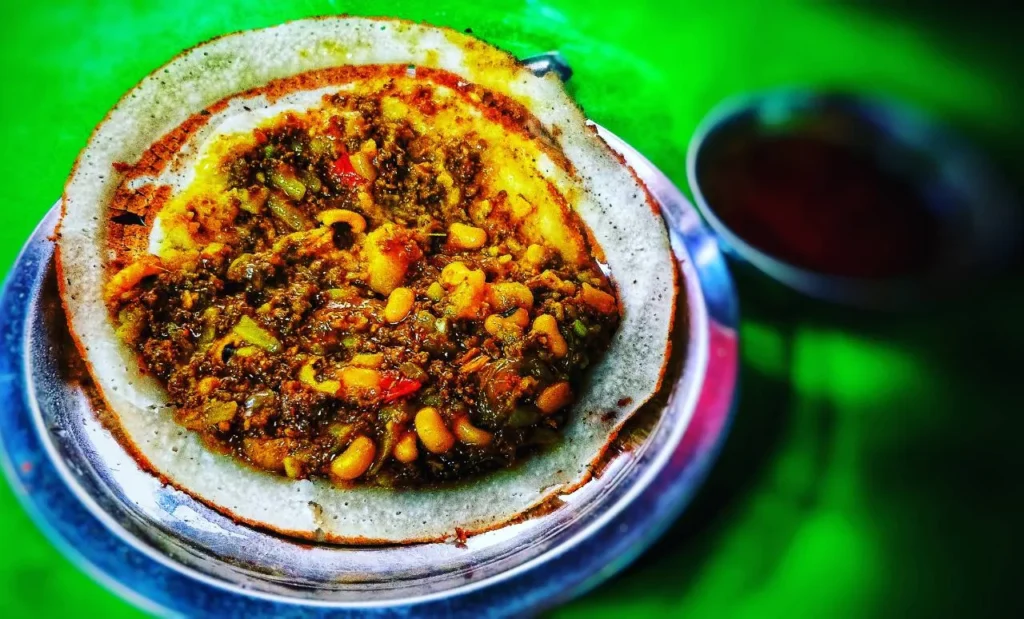
Often called “Newari pizza” by locals (a comparison that amuses them), chatamari is a thin rice-flour crepe cooked on a flat pan and topped with minced buffalo or chicken, egg, onions, chilies and spices. The base is soft and slightly chewy, the topping savoury and aromatic. It is street food and festival food at once, and one of the best value lunches in the city.
Bara and Wo — Lentil Pancakes
Bara are soft, doughnut-shaped patties made from ground black lentils, fried until golden outside and fluffy inside. Wo is the same idea in pancake form, often topped with minced meat or egg. Both are protein-rich, deeply satisfying, and commonly eaten for breakfast or as an afternoon snack with tea.
Sel Roti — The Festival Ring Bread
Sel roti is a ring-shaped bread made from rice flour, sugar, ghee and spices, deep-fried until crisp outside and soft inside. It appears at nearly every major Nepali festival, but it is a Newar speciality at heart. Freshly made sel roti with a cup of milk tea is a classic cold-morning combination in the valley.
Juju Dhau — The King of Yogurt
Bhaktapur, the third of the ancient Malla capitals, is famous for juju dhau — literally “king curd.” This is yogurt made from buffalo milk, set in clay bowls that give it a faintly earthy flavour and a thick, custard-like texture with a caramelised skin on top. It is rich enough to eat as dessert. If you make the short trip to Bhaktapur, eating juju dhau in the pottery square is a ritual in itself.
Momo — Yes, Newars Do Them Too
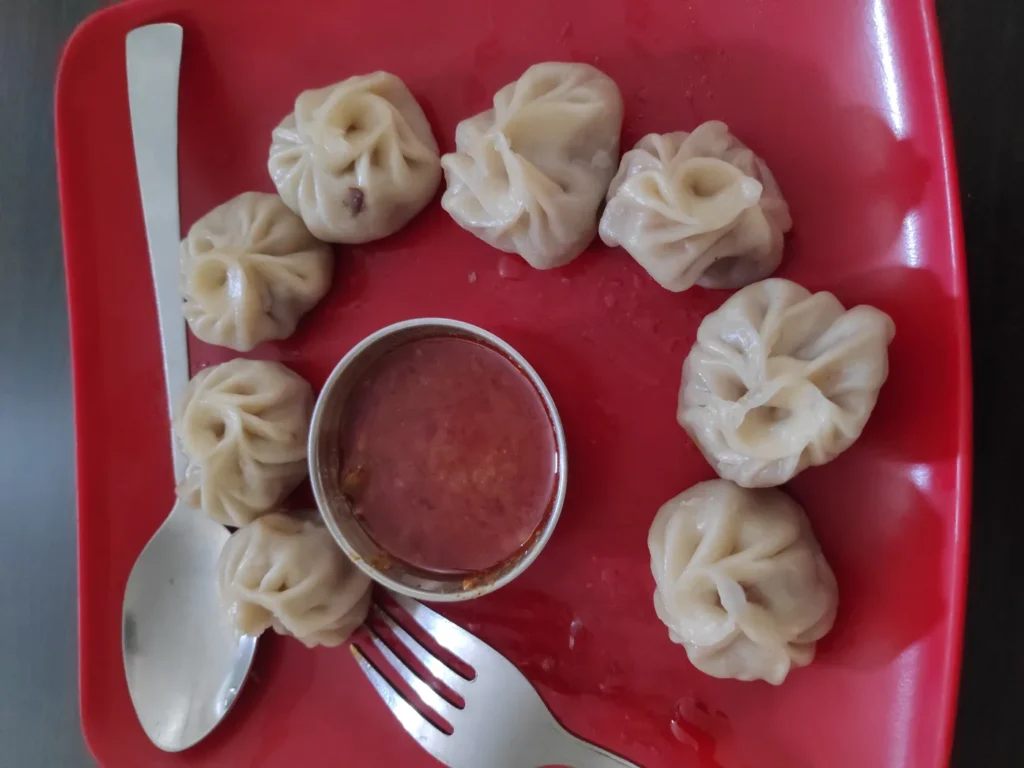
Momos are often described as Tibetan, and they are — but Kathmandu’s momo culture is inseparable from Newar kitchens. Newari-style momos tend to be smaller, juicier and served with a spicier, oilier tomato-based achar. Steamed, fried, or jhol (served in a tangy broth), they are the valley’s favourite snack, and every eatery claims to make the best. Try at least three places and form your own opinion.
Kwati and the Festival Soups
Kwati is a thick soup of nine different sprouted beans, cooked with spices and often finished with a tempering of ghee, garlic and timur. It is traditionally eaten during Gun Punhi, the festival of frogs, and is considered warming and restorative — which is exactly what you want after a day of sightseeing in the monsoon.
Aila and Thwon — The Traditional Drinks
No account of Newari cuisine is complete without its drinks. Aila is a clear, strong spirit distilled from rice or millet — smooth, potent, and traditionally poured from a small clay jug into tiny cups. Thwon is the milder, cloudier rice beer, slightly sweet and fizzy, served in clay bowls. Both are central to Newar feasts and rituals. Drink respectfully, and slowly — aila is stronger than it tastes.
The Newari Feast: Bhwe
The highest expression of Newari cuisine is the bhwe — the traditional feast. Guests sit cross-legged on the floor in rows, and food is served on lapte (leaf plates) in a strict ritual order: beaten rice first, then a precise sequence of meat, vegetable and lentil dishes, each placed in a specific position on the plate. The order matters. The portions matter. Even the way you are seated matters.
A full bhwe can involve a dozen or more dishes, and it is the centrepiece of weddings, life-cycle rituals and festivals like Mha Puja, the Newar New Year ceremony in which each family member is honoured with their own mandala and their own feast plate. If you are ever invited to a Newar home for a bhwe, accept immediately — it is one of the most generous hospitality experiences anywhere in Asia.
Where to Eat Newari Food in and Around Kathmandu
Newari food is everywhere in the valley once you know where to look. Here is how to find it.
In Thamel
Thamel is the tourist centre, and while it is full of international restaurants, several places serve honest Newari food aimed at visitors — samay baji platters, chatamari, momos and yomari, usually with milder spice levels on request. It is a comfortable starting point, though for the most authentic versions you should venture beyond the main tourist streets.
The Old City: Asan, Indra Chowk and Ason
A ten-minute walk south of Thamel brings you to Asan and Indra Chowk, the ancient market squares of old Kathmandu. This is where Newari street food lives: bara stalls, chatamari griddles, sel roti vendors and tiny shops that have served the same dishes for generations. Come hungry, point at what looks good, and eat standing up like everyone else.
Patan
Patan (Lalitpur), across the Bagmati river, is the valley’s other great Newar city. Around Patan Durbar Square you will find restaurants serving refined Newari sets in restored heritage houses — a wonderful setting for a long lunch of samay baji and chatamari.
Bhaktapur
Bhaktapur, thirty minutes east, is the most medieval of the three cities and the home of juju dhau. The pottery square, the durbar square and the narrow lanes between them are full of small eateries. Combine the sightseeing with a food crawl: yomari, juju dhau, bara and thwon, in that order.
Experience It With a Guide: A Food Tour Worth Taking
If you only have one or two days, or if you want the stories behind the food, a guided culinary tour is the best investment you can make. We recommend the Traditional Nepali Culinary & Food Tour by Enticing Himalayas. A local food expert takes you through the secret alleys, family-run eateries and bazaars of the old city, and you taste your way through momos, choila, yomari, sel roti and more — with the history and cultural context that turn a meal into an education.
They also run a Heritage Nepali Dinner with Cultural Show, served in a beautifully restored 150-year-old building that was once the residence of Nepal’s royal priest. It is the closest most travellers get to a true Newar feast, with traditional dishes, music and dance in one evening. For first-time visitors who want depth without doing all the research themselves, this is the way to do it.
Newari Food at Newa Home Hotel
You do not have to go far to start. Our rooftop restaurant serves Newari favourites alongside Nepali classics — Newari khaja set, steamed and fried momos, chicken choila, chatamari and yomari — with views over the Thamel rooftops. It is the perfect place to try your first samay baji, or to end a day of eating with one last plate of momos and a pot of masala tea. Ask our team for their recommendations; they grew up on this food and love pointing hungry guests in the right direction.
Practical Tips for Eating Your Way Through Kathmandu
- Spice is adjustable. Newari food can be very hot. Say “mild” or “less spicy” and most kitchens will happily tone it down.
- Eat where it is busy. High turnover means fresh food. A packed little shop is a better sign than an empty fancy one.
- Carry cash. Most street stalls and small eateries do not take cards. Small notes make life easier.
- Go early for street food. Bara, chatamari and sel roti are at their best fresh off the pan, usually morning to mid-afternoon.
- Respect the rituals. If you are served food on a leaf plate at a feast, eat what is in front of you, try everything, and accept second helpings graciously — refusing can be taken as an insult.
- Hydrate. The spice, the altitude and the walking add up. Drink plenty of water and take breaks between tastings.
- Prices are friendly. A full samay baji platter typically costs a few hundred rupees; street snacks are even less. Budget food has never been this good.
A Perfect Day of Eating in Kathmandu: A Sample Itinerary
Not sure how to structure a food day? Here is a route that works beautifully, starting and ending near Thamel.
- 8:00 — Breakfast in Asan. Start at the old market with bara and a cup of milk tea. Watch the vendors fry them fresh; eat two, because you will regret stopping at one.
- 10:30 — Chatamari in the old city. Walk south through the lanes to a chatamari stall. Order one with buffalo and egg, topped with fresh chilies.
- 13:00 — Samay baji lunch. Find a Newari eatery near Indra Chowk or Patan and order the full platter. Take your time — this is the centrepiece of the day.
- 15:30 — Yomari and juju dhau. If you are heading to Bhaktapur, do the yogurt there. Otherwise, hunt down a yomari shop in the old city and order two — one chaku, one khuwa.
- 18:00 — Momos. Back in Thamel, settle the great momo debate: steamed or fried? (The correct answer is both, with extra achar.)
- 20:00 — Rooftop dinner. Finish at our rooftop restaurant with a Newari khaja set, a pot of masala tea, and the evening lights over the rooftops. You have earned it.
Space it out, drink water between stops, and share dishes where you can — that way you taste more without burning out by lunchtime.
Frequently Asked Questions
Is Newari food spicy?
It can be. Choila, kachila and many achar pickles carry real heat, but most dishes are balanced rather than punishing, and kitchens will reduce spice on request. The base flavours are savoury, smoky and aromatic — mustard oil, garlic, ginger and timur — not just chili.
Can vegetarians eat Newari food?
Yes, though you should ask carefully. Bara, wo, chatamari (order the vegetable version), yomari, sel roti, juju dhau and kwati are all vegetarian-friendly. Samay baji traditionally includes meat, but many places will make a vegetarian platter if you ask.
What is the difference between Newari and Nepali food?
“Nepali food” usually means dal bhat — lentil soup, rice and vegetable curry — the everyday meal of the hills. Newari food is a specific ethnic cuisine from the Kathmandu Valley, far more elaborate, with hundreds of named dishes, ritual foods and festival specialities. Dal bhat fuels the country; Newari cuisine is its haute cuisine.
When is the best time to try festival foods?
Yomari Punhi (December) is the most delicious — yomari everywhere. Indra Jatra (September) and Mha Puja (November) also bring special foods. But samay baji, chatamari and bara are available year-round, so there is no wrong time to visit.
Is it safe to eat street food in Kathmandu?
Generally yes, if you choose busy stalls with fresh, hot food cooked in front of you. Stick to items that are fried, steamed or grilled to order, drink bottled or purified water, and ease in gradually if you have a sensitive stomach.
The Bottom Line
Newari cuisine is not a side trip in Kathmandu — it is the point. The food carries the history, religion and artistry of the valley’s oldest culture, and it is available everywhere from street stalls to heritage restaurants, at prices that let you eat like a king for a day. Start with a samay baji, follow your nose through Asan, save room for yomari, and if you want the full story told by someone who lives it, book the food tour. Your trip to Nepal will taste completely different — in the best possible way.
Staying with us? Ask the front desk at Newa Home Hotel for our personal list of favourite Newari eateries — and book a table at our rooftop restaurant for the view with your khaja set.
Stay with us in Thamel
Newa Home Hotel is your home base for exploring Kathmandu's food and culture — comfortable rooms, a rooftop restaurant, and a team that loves to point hungry guests in the right direction.